
Choosing the right shop shelving can make a big difference to how a retail store looks, operates, and serves its customers. Good shelving provides a practical place to display products while helping staff keep stock organised and making it easier for shoppers to find what they need.
From small convenience stores to large supermarkets, retail shelving comes in many styles, sizes, materials, and configurations. The best option depends on the products being displayed, available floor space, store layout, and the amount of stock that needs to be held.
What Is Shop Shelving?
Shop shelving is a retail display and storage system designed to hold products in an organised and accessible way. It can be installed against walls, positioned in the centre of a store, or arranged in different layouts to create clear shopping aisles.
Modern shelving systems are generally designed with flexibility in mind. Shelves can often be adjusted to different heights, allowing retailers to accommodate products of various sizes. This makes the system useful for everything from packaged groceries and household products to clothing, accessories, hardware, and specialist merchandise.
A well-planned shelving system doesn't simply store products. It also helps create a logical shopping environment where customers can move around comfortably and view products clearly.
Why Does Shop Shelving Matter for Retail Stores?
The right shelving can help a store make better use of its available space. Instead of leaving products in poorly organised areas, retailers can use vertical space and carefully planned layouts to display more stock without making the shop feel overcrowded.
Presentation is another important factor. Neat shelves give products a clear position and can make a retail environment look more professional. When customers can easily see and compare products, shopping becomes simpler.
Shop shelving can also support efficient stock management. Staff can quickly identify empty spaces, replenish products, rotate stock, and maintain tidy displays.
What Types of Shop Shelving Are Available?
Retailers can choose from several shelving styles depending on their store requirements.
Gondola Shelving
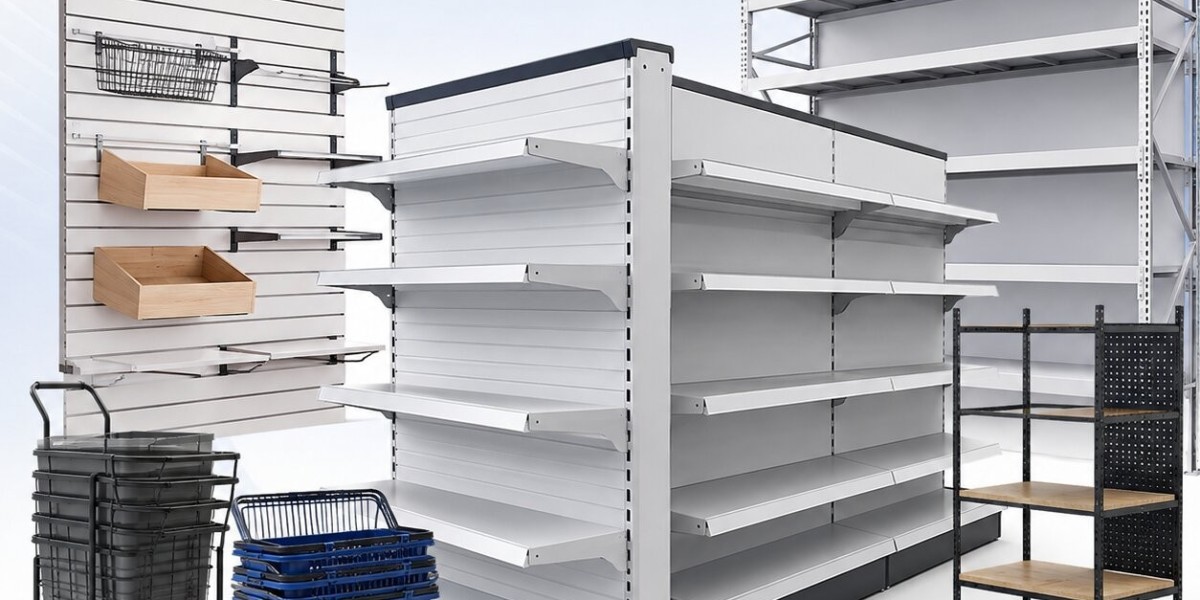
Gondola shelving is widely used in supermarkets, convenience stores, and general retail environments. It can be positioned in the middle of a shop to create aisles, while additional shelving can be placed against walls.
Its modular design makes it easy to configure according to the available space. Shelves can usually be adjusted to suit different product dimensions.
Wall Shelving
Wall shelving makes effective use of perimeter space. It can provide valuable display capacity without taking up too much floor area.
This style works particularly well for stores where floor space is limited or where retailers want to keep the centre of the shop open.
Display Shelving
Display shelving focuses on product presentation as well as storage. It can be used to create attractive product arrangements and highlight particular ranges.
Retailers can use different shelf heights, finishes, and layouts to create displays that fit their store environment.
Heavy-Duty Shelving
Heavy-duty shelving is designed for products that are larger or heavier than standard retail items. It may be suitable for hardware stores, trade counters, warehouses, and other commercial environments.
Strong frames and durable shelves provide additional support where ordinary retail shelving may not be appropriate.
Slatwall Shelving
Slatwall systems provide a flexible way to display merchandise on walls. Shelves, hooks, brackets, and other accessories can often be repositioned to accommodate changing product ranges.
They're particularly useful for stores that regularly update displays or sell products in different shapes and sizes.
How Can Shelving Improve Store Layout?
Store layout should be considered before purchasing shelving. The aim isn't simply to fit as many shelves as possible into the available space. Customers need enough room to move comfortably between displays.
Shelving can be arranged to create clear aisles and defined product sections. Popular products can be positioned in convenient areas, while complementary products can be placed close together to make shopping more straightforward.
Wall shelving can maximise perimeter space, while gondola units can divide the central area into organised aisles. Combining different shelving styles can therefore help retailers create a balanced layout.
What Materials Are Used for Shop Shelving?
Metal is one of the most common materials because it's strong, durable, and suitable for busy retail environments. Steel shelving can support regular use and withstand frequent stock replenishment.
Wooden shelving can provide a warmer appearance and may work well in boutiques, lifestyle stores, and specialist retail environments. Glass shelves are another option where visibility and presentation are important.
The choice of material should match both the products and the overall appearance of the store.
What Should You Look for When Buying Shop Shelving?
Several factors should be considered before choosing a shelving system.
Size and dimensions: Measure the available floor and wall space carefully. Check the height, width, and depth of each shelving unit.
Weight capacity: Consider the weight of the products that will be stored. Heavy products require a shelving system with suitable load capacity.
Adjustability: Adjustable shelves provide greater flexibility when product ranges change.
Durability: Retail shelving is used regularly, so strong construction is important for long-term performance.
Appearance: Shelving should complement the store's interior and help create a consistent presentation.
Accessibility: Products should be easy for customers to see and reach, while staff should be able to restock shelves without difficulty.
Future flexibility: A modular system can make it easier to expand, rearrange, or update the store later.
How Can Shop Shelving Support Better Product Organisation?
Organisation is one of the biggest advantages of a well-designed shelving system. Products can be grouped by category, size, brand, type, or customer need.
Shelf labels and dividers can further improve organisation. Keeping similar products together helps customers locate items faster and can make stock management easier for employees.
Retailers can also adjust shelf heights as their product selection changes. This avoids wasting vertical space and allows different products to be displayed more effectively.
Why Choose Professional Retail Shelving Solutions?
Retail shelving needs to balance appearance, practicality, strength, and available space. A suitable system can improve product presentation while helping retailers make better use of their premises.
For businesses looking for practical retail storage and display options, Shop Solutions Midlands provides shelving solutions designed for different commercial environments.
Whether you're fitting out a new shop, replacing outdated units, or changing your existing layout, choosing the right shelving system from the beginning can save time and provide greater flexibility in the future. Read more: Shop Counters in uk
Frequently Asked Questions
Can shop shelving be adjusted?
Yes. Many modern shelving systems feature adjustable shelves, allowing retailers to change the spacing according to product sizes and display requirements.
Is shop shelving suitable for small stores?
Yes. Wall-mounted and compact shelving options can help smaller stores use limited space efficiently while maintaining clear customer walkways.
What is gondola shelving used for?
Gondola shelving is commonly used to create central aisles in supermarkets, convenience stores, and other retail environments. It provides product display space on one or both sides.
How much weight can retail shelving hold?
The weight capacity varies depending on the shelving design, materials, and construction. Always check the manufacturer's specified load rating before placing heavy products on a unit.
Can shelving be combined with other retail equipment?
Yes. Shelving can often be combined with display fixtures, baskets, hooks, signage systems, and other retail equipment to create a complete store layout.
How do I choose the right shelving for my shop?
Start by considering your available space, product sizes, stock weight, store layout, appearance, and future requirements. These factors will help you select shelving that is practical and suitable for your retail environment.