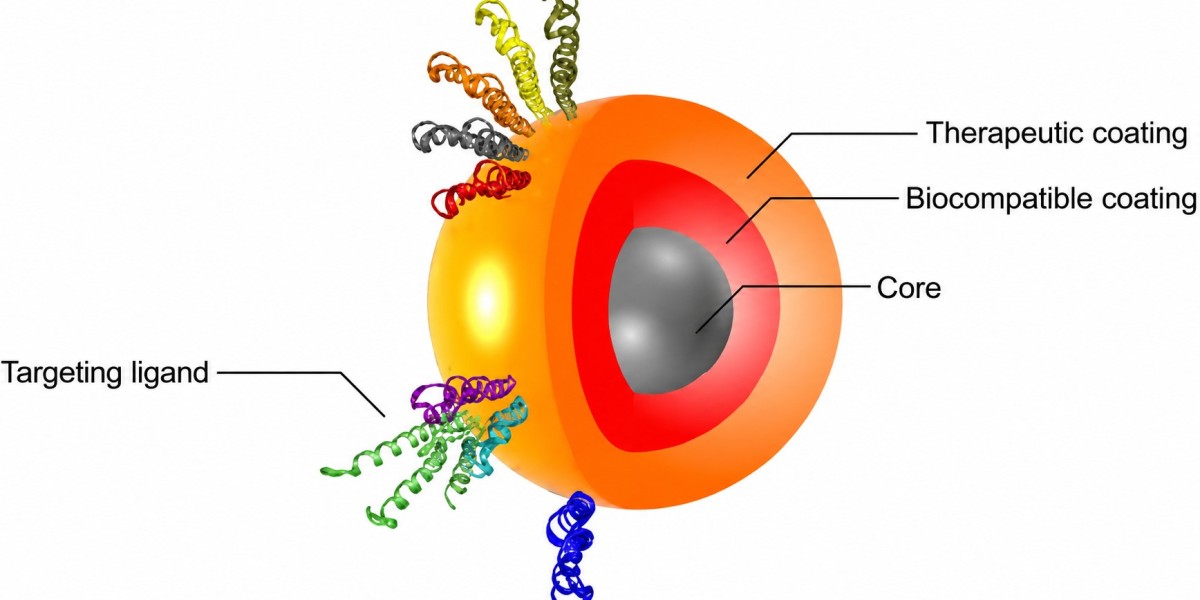

Polyelectrolyte coated nanoparticle SPION is an advanced nanomaterial that combines the magnetic properties of superparamagnetic iron oxide nanoparticles with the functional characteristics of polyelectrolyte surface coatings. These nanoparticles have attracted significant interest in scientific research because their magnetic cores can respond to an external magnetic field while their surface coatings can improve stability, dispersibility, biocompatibility, and functionalization. This combination makes them useful for research in biomedical applications, drug delivery, imaging, separation technologies, sensing, catalysis, and other areas of nanotechnology. Understanding the structure, properties, preparation methods, benefits, and applications of polyelectrolyte coated nanoparticle SPION can help researchers better evaluate its potential for advanced material development.
What Is Polyelectrolyte Coated Nanoparticle SPION?
A polyelectrolyte coated nanoparticle SPION is generally based on a superparamagnetic iron oxide nanoparticle core surrounded by a layer of charged polymer known as a polyelectrolyte. The magnetic core provides the nanoparticle with its characteristic response to an external magnetic field, while the polymer coating modifies the surface and provides additional chemical functionality. Depending on the selected polyelectrolyte, the surface may carry positive or negative charges and can interact with biological molecules, other nanoparticles, ions, or targeted compounds. This surface modification is particularly valuable because uncoated magnetic nanoparticles may have a tendency to aggregate, whereas a suitable polymer coating can improve their colloidal stability and make them easier to handle in different environments.
Structure of Polyelectrolyte Coated SPION
The structure of these nanoparticles can be understood as a magnetic iron oxide core surrounded by a functional polymer layer. The SPION core is responsible for magnetic behavior, while the polyelectrolyte shell controls many surface-related properties. The coating can create electrostatic interactions, steric stabilization, and chemical binding sites depending on the polymer chemistry. This core-shell arrangement allows researchers to preserve the useful magnetic characteristics of the nanoparticle while introducing a surface that can be modified for specific applications. The final properties depend on factors such as particle size, core composition, coating chemistry, surface charge, coating thickness, and the surrounding medium.
Why Polyelectrolyte Coating Is Important
Polyelectrolyte coating is important because surface chemistry strongly influences how nanoparticles behave in liquids and biological environments. Magnetic nanoparticles can interact with one another and form aggregates because of magnetic attraction and surface forces. A polymer coating can help reduce unwanted aggregation by creating repulsive or steric effects between particles. It can also provide functional groups that allow researchers to attach drugs, biomolecules, targeting molecules, fluorescent compounds, or other functional materials. As a result, polyelectrolyte modification can transform a relatively simple magnetic nanoparticle into a more versatile platform for advanced research.
Magnetic Properties of SPION
Superparamagnetic iron oxide nanoparticles are known for their distinctive magnetic response at the nanoscale. In the absence of an external magnetic field, appropriately sized SPION particles can show very low or negligible residual magnetization, which helps reduce permanent aggregation after the magnetic field is removed. When an external magnetic field is applied, the particles can respond strongly and can be manipulated using magnetic forces. This behavior is highly valuable for magnetic separation, imaging research, targeted delivery systems, and other applications where controlled movement of nanoparticles is required.
Surface Charge and Stability
The surface charge of a polyelectrolyte coated nanoparticle plays an important role in its interaction with the surrounding environment. Positively charged and negatively charged coatings can produce different interactions with cells, proteins, ions, and other particles. Surface charge is also related to colloidal stability because electrostatic repulsion can help prevent particles from approaching each other closely enough to aggregate. Researchers commonly evaluate surface charge through measurements such as zeta potential to understand how stable a nanoparticle suspension may be under particular conditions. However, stability depends on more than surface charge alone and can also be influenced by pH, ionic strength, temperature, polymer structure, and the composition of the surrounding solution.
Role of Polyelectrolytes in Nanoparticle Functionalization
Polyelectrolytes can provide numerous functional groups on the nanoparticle surface, making them useful for further chemical modification. Depending on the polymer selected, the surface may contain groups capable of interacting with biological molecules or binding specific compounds. This creates opportunities for attaching therapeutic molecules, targeting agents, imaging components, or other functional materials. Surface functionalization can also change how nanoparticles interact with proteins and biological membranes. The ability to tailor the surface makes polyelectrolyte coated SPION particularly attractive for applications where precise control over nanoparticle behavior is required.
Preparation of Polyelectrolyte Coated Nanoparticle SPION
Preparation generally involves producing or obtaining the magnetic iron oxide nanoparticle core and subsequently introducing a suitable polyelectrolyte coating. The coating may be applied through adsorption, electrostatic assembly, layer-by-layer deposition, covalent attachment, or other surface modification approaches. The exact method depends on the desired coating characteristics and intended application. During preparation, researchers carefully control conditions such as polymer concentration, solution chemistry, pH, ionic strength, mixing conditions, and purification procedures. Proper optimization is important because an unsuitable coating process can influence particle size, aggregation, magnetic performance, surface charge, and long-term stability.
Layer-by-Layer Coating Approach
Layer-by-layer assembly is an important strategy for modifying nanoparticle surfaces with polyelectrolytes. In this approach, polymers with opposite charges can be deposited sequentially onto a nanoparticle surface, creating a controlled multilayer structure. This technique provides flexibility in adjusting surface properties and can allow researchers to introduce different functionalities into separate layers. The resulting coating can improve stability and create a platform for additional functional molecules. Because the surface architecture can be adjusted during preparation, layer-by-layer methods are particularly interesting for researchers developing nanoparticles with specialized properties.
Characterization of Polyelectrolyte Coated SPION
Characterization is essential for determining whether the prepared nanoparticles have the desired physical, chemical, and magnetic properties. Researchers may evaluate particle size, morphology, surface charge, magnetic behavior, chemical composition, coating presence, and colloidal stability using different analytical techniques. Microscopy can provide information about particle morphology, while spectroscopic methods can help confirm surface chemistry. Magnetic measurements can reveal changes in magnetic response, and surface charge measurements can provide information about colloidal behavior. Combining several characterization methods provides a more complete understanding of the relationship between nanoparticle structure and performance.
Particle Size and Morphology
Particle size has a major influence on the behavior of SPION. Nanoscale dimensions can affect magnetic properties, surface area, dispersion, biological interactions, and transport behavior. Morphology also influences how nanoparticles interact with their environment. Researchers therefore pay close attention to particle size distribution and shape during material development. A uniform nanoparticle population can be beneficial for reproducibility, while excessive aggregation may reduce the advantages associated with nanoscale dimensions. The polymer coating can further influence the apparent hydrodynamic size of the particles when they are dispersed in liquid.
Colloidal Stability of Coated Nanoparticles
Colloidal stability is one of the major advantages associated with suitable polyelectrolyte coatings. A stable nanoparticle suspension remains sufficiently dispersed rather than rapidly forming large aggregates. Stability is influenced by electrostatic interactions, steric effects, polymer density, solvent conditions, pH, and ionic strength. A well-designed coating can help maintain nanoparticle dispersion under the conditions required for a particular application. This is especially important in biomedical and laboratory environments, where aggregation can influence transport, activity, reproducibility, and interaction with biological systems.
Biomedical Applications
Polyelectrolyte coated nanoparticle SPION has considerable potential in biomedical research because magnetic behavior and surface functionality can be combined in a single nanoscale platform. Researchers have investigated these materials for drug delivery, magnetic resonance imaging research, biosensing, magnetic separation, hyperthermia research, and targeted delivery concepts. The magnetic core can provide a means of manipulating or detecting the particles, while the polymer coating can be adapted for interaction with biological molecules. However, suitability for a particular biomedical application depends on factors such as composition, coating chemistry, particle size, surface properties, stability, and biological compatibility.
Drug Delivery Research
One important area of interest is controlled drug delivery. A polyelectrolyte coating can provide chemical sites or electrostatic interactions that assist in loading certain therapeutic molecules onto or within a nanoparticle system. The magnetic core may also allow researchers to investigate magnetic guidance or concentration of particles in specific experimental environments. Polymer properties can influence drug loading, release behavior, and interaction with surrounding tissues or biological fluids. Research in this area focuses on designing systems that provide controlled behavior while maintaining appropriate stability and biological compatibility.
Magnetic Resonance Imaging Research
SPION materials have been widely investigated for magnetic resonance imaging applications because of their magnetic properties. When incorporated into suitable nanoparticle systems, they can influence local magnetic environments and produce detectable effects in imaging studies. A polyelectrolyte coating can improve dispersion and provide a surface for attaching additional functional components. This creates opportunities for developing multifunctional nanoparticles that combine magnetic imaging properties with targeting or molecular recognition capabilities.
Magnetic Hyperthermia Research
Magnetic hyperthermia research explores the ability of magnetic nanoparticles to generate heat when exposed to an alternating magnetic field under appropriate conditions. SPION can be investigated for this purpose because their magnetic response can convert electromagnetic energy into heat through nanoscale magnetic relaxation processes. A polyelectrolyte coating may improve dispersion and provide additional control over particle interactions. The heating behavior depends on several factors, including particle characteristics, magnetic properties, concentration, field conditions, and the surrounding environment.
Biosensing Applications
The combination of magnetic properties and functional polymer surfaces makes polyelectrolyte coated SPION attractive for biosensor research. Surface functional groups can be used to interact with selected biological molecules, while the magnetic core can assist with separation, concentration, or detection strategies. Magnetic nanoparticles can potentially improve the handling of target molecules by allowing researchers to manipulate the particles using external magnetic fields. This concept has been explored in areas such as biomolecule detection, diagnostic research, and analytical separation.
Environmental and Separation Applications
Polyelectrolyte coated magnetic nanoparticles can also be useful beyond biomedical research. Their magnetic response allows them to be separated from liquid environments using an external magnetic field. When the surface is appropriately functionalized, the particles can interact with selected contaminants, ions, dyes, or other compounds. Researchers can then investigate magnetic recovery and reuse as part of separation processes. This combination of adsorption or binding functionality with magnetic recoverability makes coated SPION interesting for environmental and analytical applications.
Advantages of Polyelectrolyte Coated Nanoparticle SPION
The main advantages of polyelectrolyte coated nanoparticle SPION include improved surface functionality, enhanced dispersion, controllable surface charge, magnetic responsiveness, and opportunities for further chemical modification. The coating can help reduce aggregation while creating a versatile interface between the magnetic core and the surrounding environment. These properties allow researchers to design nanoparticles for specific experimental requirements. The ability to independently modify the core and surface is particularly valuable when developing multifunctional nanomaterials.
Factors Affecting Performance
The performance of polyelectrolyte coated SPION depends on many interconnected factors. Core composition, particle size, morphology, coating chemistry, surface charge, polymer density, coating thickness, pH, ionic strength, and temperature can all influence behavior. The intended application must therefore be considered during material design. A coating that performs well in one environment may not provide the same results under different conditions. Careful characterization and optimization are essential for obtaining consistent and reproducible nanoparticle performance.
Challenges in Using Polyelectrolyte Coated SPION
Despite their potential, these nanoparticles also present several challenges. Controlling particle size and coating uniformity can be difficult, particularly during large-scale preparation. Changes in environmental conditions may affect surface charge and colloidal stability. Biological applications also require careful evaluation of interactions with proteins, cells, and tissues. Long-term stability and reproducibility can be additional concerns. Researchers must therefore balance magnetic performance, surface functionality, stability, and compatibility when designing a suitable nanoparticle system.
Future Potential of Polyelectrolyte Coated SPION
The future potential of polyelectrolyte coated SPION lies in the development of multifunctional nanomaterials with carefully controlled magnetic and surface properties. Advances in polymer chemistry, nanoparticle synthesis, surface engineering, and analytical characterization may allow researchers to create increasingly precise materials. Potential developments include smarter drug delivery platforms, advanced biosensors, improved magnetic separation systems, responsive materials, and multifunctional imaging technologies. Continued research may also improve understanding of nanoparticle interactions with complex biological and environmental systems.
Frequently Asked Questions About Polyelectrolyte Coated Nanoparticle SPION
What is SPION?
SPION stands for superparamagnetic iron oxide nanoparticle. These nanoscale magnetic materials can respond to an external magnetic field and are widely studied for biomedical, analytical, environmental, and technological applications.
What does polyelectrolyte coating do to SPION?
A polyelectrolyte coating can improve nanoparticle dispersion, modify surface charge, provide chemical functional groups, reduce aggregation, and create opportunities for attaching additional molecules or materials to the nanoparticle surface.
Why are polyelectrolyte coated SPION useful?
They combine magnetic responsiveness with customizable surface chemistry. This combination makes them useful for research involving drug delivery, imaging, sensing, separation, catalysis, and other advanced nanotechnology applications.
Can polyelectrolyte coated SPION be used for drug delivery?
They can be investigated for drug delivery research because their polymer surfaces can interact with or carry certain therapeutic molecules, while their magnetic cores provide opportunities for magnetic manipulation and other controlled delivery strategies.
How are polyelectrolyte coated SPION characterized?
Researchers can characterize these nanoparticles by examining their morphology, particle size, surface charge, chemical composition, coating structure, magnetic properties, and colloidal stability. Different analytical techniques are generally combined to obtain a complete material profile.
Does the coating affect the magnetic properties of SPION?
The coating can influence the overall magnetic behavior indirectly by changing particle interactions, spacing, aggregation, and the surrounding environment. The magnetic core remains the primary source of magnetic response, while coating characteristics can affect how the particles behave as a suspension.
Are polyelectrolyte coated SPION stable in water?
Their stability depends on the type of polyelectrolyte, surface charge, coating structure, particle characteristics, pH, ionic strength, and other environmental conditions. A properly designed coating can significantly improve aqueous dispersion compared with poorly stabilized magnetic nanoparticles.
What are the main research applications of these nanoparticles?
Major research areas include biomedical imaging, drug delivery, magnetic hyperthermia, biosensing, magnetic separation, environmental remediation, catalysis, and development of multifunctional nanomaterials.
Conclusion
Polyelectrolyte coated nanoparticle SPION represents a versatile class of engineered nanomaterials that combines the magnetic responsiveness of superparamagnetic iron oxide nanoparticles with the functional and stabilizing properties of charged polymer coatings. The magnetic core enables manipulation through external magnetic fields, while the polyelectrolyte layer can improve dispersion, control surface charge, reduce aggregation, and provide chemical sites for further functionalization. These characteristics make the material valuable across a broad range of research fields, including biomedical science, drug delivery, imaging, biosensing, separation, and environmental technology. As nanoparticle engineering and polymer chemistry continue to develop, polyelectrolyte coated SPION may offer even greater opportunities for designing controlled, multifunctional, and application-specific nanomaterials.