
Financial markets move quickly. Stock prices can change within seconds because of company news, economic updates, investor sentiment, and global events. For investors, traders, financial analysts, and developers, having access to accurate and timely market information is becoming more important than ever.
In the past, financial analysis often depended on newspapers, financial websites, spreadsheets, and manually collected information. While these methods can still provide useful insights, modern technology has made it possible to collect and process financial data much faster.
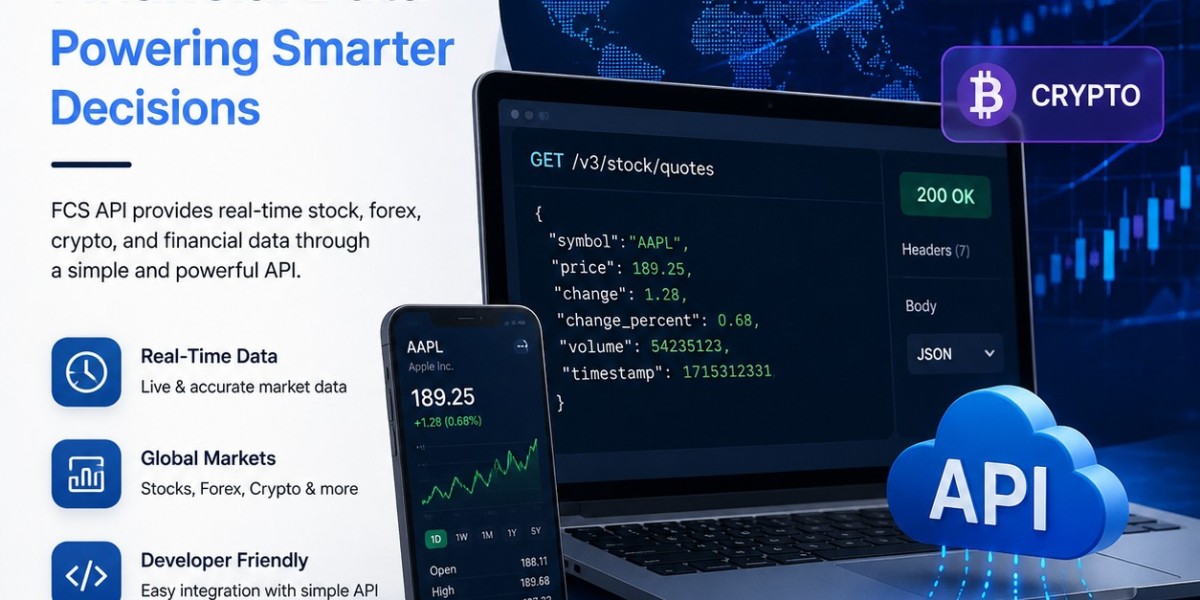
A Stock Market Data API is one of the technologies helping make this possible. It allows applications, websites, trading platforms, and financial tools to connect with market data and use it automatically. A stock exchange data API can provide information such as stock prices, market movements, historical data, and other financial information without requiring users to collect everything manually.
What Is a Stock Market Data API?
Understanding the Basic Concept
An API, or Application Programming Interface, allows different software applications to communicate with each other. In simple terms, a Stock Market Data API acts as a connection between a financial data provider and an application that needs market information.
For example, a developer may be building a stock analysis website. Instead of manually entering the latest prices of thousands of companies, the developer can connect the website to a market data API. The API can then deliver the required information to the website automatically.
This makes it easier to build financial dashboards, stock screeners, portfolio tools, trading applications, and other market-related products.
What Data Can an API Provide?
The exact information depends on the API provider, but a market data service may provide different types of information, including:
Real-time or delayed stock prices
Historical price data
Open, high, low, and close prices
Trading volume
Market trends
Company information
Exchange information
Currency and forex data
Cryptocurrency prices
ETF and index data
Commodity prices
A stock exchange data API can therefore become an important source of information for applications that need structured financial data.
Why Financial Analysis Is Changing
Faster Access to Market Information
Speed is an important part of modern financial analysis. Investors and analysts need to understand what is happening in the market without waiting for information to be collected manually.
APIs can automatically deliver updated information to connected applications. This allows users to view changing market conditions more quickly and make their research process more efficient.
For example, if a stock moves sharply during a trading session, a financial dashboard connected to an API can display the updated price without requiring someone to manually update the information.
Less Manual Data Collection
Manual data collection takes time and can also introduce errors. An analyst working with large amounts of information may need to collect prices from multiple sources and organize them in spreadsheets.
A Stock Market Data API can automate much of this process. Instead of repeatedly collecting data, analysts can use structured information delivered directly to their applications.
This gives analysts more time to focus on understanding the data instead of simply gathering it.
How Stock Market Data APIs Improve Financial Analysis
Making Large Amounts of Data Easier to Handle
Modern financial markets generate huge amounts of information. Tracking individual stocks manually becomes difficult when an investor wants to compare hundreds or thousands of assets.
An API can help applications collect and organize large datasets. Analysts can then use this information to compare companies, examine price movements, identify trends, and conduct research.
For example, an analyst could compare historical prices and trading volumes for multiple stocks instead of reviewing each company separately.
Supporting Real-Time Market Monitoring
Real-time information can be especially useful for traders and financial platforms.
A stock exchange data API can allow applications to display current market information as it becomes available. This can support dashboards that show price changes, market performance, and other important indicators.
Real-time data does not automatically guarantee better investment decisions, but it gives users a more current view of market conditions.
Improving Data-Based Decision Making
Financial analysis is increasingly based on data. Investors can examine historical performance, compare assets, monitor trends, and study different market conditions before making decisions.
APIs make this information easier to access and integrate into analytical tools.
Instead of relying only on opinions or general market commentary, users can work with structured data and develop their own research process.
Applications of Stock Exchange Data APIs
Financial Websites and Dashboards
Many financial websites need to display continuously changing information. A Stock Market Data API can provide the data needed for stock pages, market dashboards, price tables, and financial charts.
This can create a more useful experience for visitors because they can access important market information from one location.
Stock Screening Tools
Stock screeners help users find companies that match specific conditions. For example, a user may want to find stocks based on price, market capitalization, trading volume, or performance.
A stock exchange data API can provide the underlying information needed by these tools. The application can process the data and allow users to filter stocks according to their selected criteria.
Trading and Investment Applications
Developers can also use market data APIs when building trading and investment applications. These applications may display prices, charts, historical information, portfolio data, and other market details.
The API essentially provides the financial data layer that supports many of these features.
Research and Educational Platforms
Financial data is also useful for learning. Students, new investors, and researchers can study historical market movements and understand how different assets behave.
Platforms that provide educational content can combine market data with charts and explanations to make financial concepts easier to understand.
Key Benefits for Developers
Easier Integration
One major advantage of using an API is that developers do not have to build an entire financial data collection system from scratch.
Instead, they can connect their application to an existing data provider and use available endpoints to retrieve the information they need.
Scalable Financial Applications
As an application grows, its need for market information may also increase. A suitable API can help applications handle larger amounts of financial data without requiring developers to manually manage every data source.
This can be useful for fintech startups, financial websites, research platforms, and other technology businesses.
Multiple Asset Classes
Modern financial analysis is not limited to stocks. Investors often look at currencies, cryptocurrencies, commodities, ETFs, and indices as well.
A financial API that supports multiple asset classes can make it easier to create applications that provide a broader view of global markets.
Choosing the Right Stock Market Data API
Check Data Coverage
Before choosing an API, users should check which markets and exchanges it covers. If an application requires international market information, the provider should offer suitable global coverage.
It is also useful to check whether the API supports the specific asset classes required by the project.
Consider Data Frequency
Different applications have different data requirements. Some may only need historical information, while others require frequently updated market data.
Understanding whether an API provides real-time, delayed, or historical data is important before integrating it into a project.
Look at Documentation and Ease of Use
Good documentation can make API integration much easier for developers. Clear endpoint descriptions, examples, authentication instructions, and response formats can reduce development time.
A technically strong API is much more useful when developers can understand and implement it without unnecessary complexity.
Consider Reliability and Performance
Financial applications depend on consistent data access. Before selecting a provider, developers should consider factors such as API availability, response speed, usage limits, and overall reliability.
These factors can have a direct impact on the user experience of a financial application.
The Role of FCS API in Modern Financial Data
FCS API is a financial information platform designed to provide real-time market data, news, and analysis for global financial markets. Its coverage includes cryptocurrencies, stocks, forex, commodities, ETFs, and indices.
By bringing different types of financial information together, FCS API can support users who want to monitor prices, study market trends, and build financial applications. The platform also provides charts, economic updates, and educational content to help users understand financial markets.
For developers, access to structured financial information can make it easier to create applications that depend on market data. For investors and researchers, organized market information can support a more efficient approach to financial analysis.
The Future of Financial Analysis With APIs
More Automation
Financial analysis is likely to become increasingly automated. Instead of manually collecting and organizing information, analysts can use software to process large datasets and highlight important changes.
APIs are an important part of this development because they provide applications with a structured way to access financial information.
Greater Use of Data Across Financial Tools
As financial technology continues to develop, market data will become part of more applications and services. From personal investment dashboards to professional research platforms, financial data can help users understand markets more efficiently.
A reliable stock exchange data API can provide the foundation for many of these tools.
Combining Market Data With Advanced Technology
Artificial intelligence, automation, analytics, and other technologies are also changing financial research. These technologies require large amounts of structured information to work effectively.
As these tools develop, high-quality market data will remain an important part of modern financial analysis.
Conclusion
The way people analyze financial markets has changed significantly with the growth of financial technology. Instead of depending entirely on manual research and static information, investors, analysts, and developers can now work with automated and structured market data.
A Stock Market Data API makes it easier for applications to access financial information, monitor market movements, analyze historical data, and create useful financial tools. At the same time, a stock exchange data API can help developers build applications that depend on timely and organized information from financial markets.