
Setting up a home gym sounds simple until you start looking at how much equipment you actually need. A bench takes up space. Weight plates need storage. Fixed dumbbells can quickly turn a small corner into a mini equipment room. And if you want to perform different exercises, you may need several weight options.
That is where Adjustable Dumbbells for Home Gym workouts can make things much simpler.
Instead of keeping multiple pairs of dumbbells around, an adjustable set lets you change the resistance according to the exercise. You might use a lighter setting for lateral raises and switch to something heavier for squats or rows. The basic idea is simple, but choosing the right set requires a little thought.
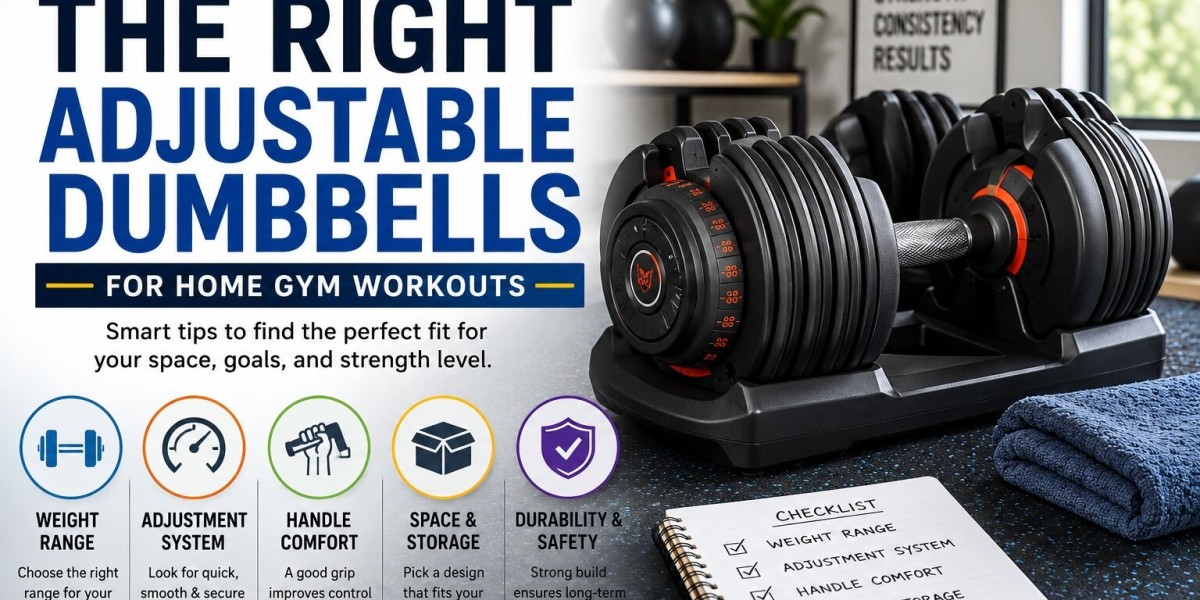
Not every adjustable dumbbell feels the same. Weight range, adjustment system, handle design, storage, durability, and ease of use can all affect your experience.
So, how do you choose the right pair?
Let’s look at the important factors without getting lost in complicated gym terminology.
Why Adjustable Dumbbells Make Sense for a Home Gym
The biggest attraction is flexibility.
Traditional dumbbells come in fixed weights. If you want to train with 10, 15, 20, and 25 pounds, you need four pairs. Increase your training range and the collection grows quickly.
With Adjustable Dumbbells for Home Gym training, several resistance levels can be combined into one piece of equipment. This can save valuable floor and storage space.
They can also make workouts easier to organize. Instead of walking around the room looking for the right pair, you adjust the weight and continue with your workout.
That does not mean adjustable dumbbells are automatically better for everyone. Some people prefer the simplicity and feel of traditional fixed dumbbells. The right choice depends on your available space, training style, budget, and personal preferences.
Start With Your Workout Goals
Before looking at specific features, think about what you actually want to accomplish.
Are you mainly interested in general fitness? Strength training? Muscle building? Home workouts a few times a week? Or are you planning to follow a structured resistance-training program?
Your answer should influence the weight range you choose.
For example, someone focusing on shoulder exercises may spend a lot of time using relatively light weights. Someone performing goblet squats or heavy rows may eventually need considerably more resistance.
This is why choosing a dumbbell simply because it looks compact can be a mistake. A small design is useful, but it does not matter much if the maximum weight is too low for your training goals.
Think about where you are now, but also consider where you may be several months from now.
Choose a Weight Range That Gives You Room to Progress
Weight range is one of the most important factors when comparing Adjustable Dumbbells for Home Gym equipment.
You want enough resistance for challenging exercises without choosing a weight range that is unnecessarily large for your needs.
A beginner may not need an extremely heavy maximum weight immediately. However, strength can improve with consistent training. If you purchase a set that barely challenges you after a few months, you may end up replacing it sooner than expected.
At the same time, heavier is not always better.
A weight that you cannot control properly can make an exercise less effective and increase the chance of losing good form. The goal should be to have enough adjustment options to match different exercises and your gradual progress.
A useful approach is to identify the lightest and heaviest weights you realistically expect to use, then look for a set that comfortably covers that range.
Pay Attention to the Adjustment Mechanism
Adjustable dumbbells use different systems to change resistance.
Some use dials. Others use pins, selector mechanisms, plates, or locking systems. Each design has advantages and disadvantages.
The most important question is not which mechanism looks most impressive. Ask yourself:
Can I change the weight easily and confidently?
If you regularly move between exercises, a complicated adjustment system can become annoying. You may also want to check whether both dumbbells can be adjusted independently and whether the selected weight stays securely in place.
A good adjustment mechanism should feel predictable. You should know what weight you have selected and feel confident that the components are properly locked before starting an exercise.
Consider the Handle Design
The handle is easy to overlook when shopping for Adjustable Dumbbells for Home Gym use, but you will notice a poor handle very quickly during a workout.
Look for a handle that feels comfortable without being excessively slippery. The diameter matters, too. A handle that feels awkward in your hand can become distracting during longer workouts.
Texture can also make a difference. Some handles have knurled surfaces, while others use rubberized or coated materials.
There is no single design that feels perfect for everyone. If possible, pay attention to how the handle feels in your hand rather than judging it by appearance alone.
Think About the Shape of the Dumbbell
Not all adjustable dumbbells have the same physical shape.
Some remain relatively compact as you increase the weight. Others become longer or wider because additional plates or sections are added.
This matters during exercises where the dumbbell moves close to your body.
For example, a bulky dumbbell may feel different during presses, curls, rows, or movements where your elbows and arms travel close to your torso.
A longer dumbbell can also affect balance. That does not necessarily make it unsafe, but it can change how the exercise feels.
If possible, consider the physical dimensions at both the lowest and highest settings.
Check How Much Space You Actually Have
One of the main reasons people consider Adjustable Dumbbells for Home Gym setups is limited space.
Still, remember that the dumbbells need more than just storage space. You also need enough room to use them safely.
Before buying, look at your workout area. Can you comfortably extend your arms? Can you perform squats, lunges, presses, and rows without hitting furniture or walls?
Also consider where you will store the dumbbells between workouts.
A dedicated storage tray or stand can keep everything organized and reduce the chance of leaving equipment scattered across the floor.
Look at the Weight Increments
The difference between adjustment levels can be just as important as the maximum weight.
Imagine that you can use 10 pounds and then jump directly to 20 pounds. That may be too large a jump for some exercises.
Smaller increments give you more opportunities to gradually increase resistance.
This is particularly useful for exercises involving smaller muscle groups, where adding a lot of weight at once may be unrealistic.
When comparing Adjustable Dumbbells for Home Gym options, check the actual progression between settings rather than looking only at the lowest and highest numbers.
Think About Balance and Stability
A dumbbell should feel balanced when you hold it.
This becomes especially important with adjustable designs because the weight distribution can change depending on the selected setting.
Hold the dumbbell naturally and consider whether the weight feels centered around your hand. An awkward balance can make certain movements feel less comfortable.
You should also check how securely the plates or weight sections stay attached.
Any adjustable system should be used according to the manufacturer's instructions. Before every workout, take a moment to make sure the adjustment mechanism is properly engaged.
That small habit can go a long way toward making workouts more comfortable and controlled.
Durability Matters More Than Appearance
A shiny piece of equipment can look great in a home gym, but appearance tells you very little about how it will perform over time.
Look at the materials used for the handle, plates, adjustment components, and locking mechanism.
Consider how often you expect to train. Someone who uses dumbbells twice a week has different durability needs from someone who trains almost every day.
Also think about how you will treat the equipment. Adjustable dumbbells generally benefit from careful handling. Dropping them repeatedly can place unnecessary stress on mechanical components, even if the product is designed for regular training.
Good equipment should fit your habits rather than requiring you to completely change them.
Fixed Dumbbells vs. Adjustable Dumbbells
The choice between fixed and adjustable dumbbells is worth considering.
Fixed dumbbells are straightforward. Pick one up and start exercising. There is no adjustment mechanism and no need to change the configuration between movements.
Their drawback is storage. A complete collection can take up significant space.
Adjustable dumbbells offer a different approach. One pair can cover multiple resistance levels, making them especially practical for smaller workout spaces.
However, the adjustment mechanism adds complexity. Some users may prefer the familiar feel of traditional dumbbells.
Neither option is universally better. The best choice depends on how you train and how much space you have.
Don't Forget About the Exercises You Actually Perform
It is easy to become focused on specifications and forget the most important question: What exercises will you do?
Make a list of your regular movements.
You might include:
- Goblet squats
- Lunges
- Romanian deadlifts
- Dumbbell rows
- Chest presses
- Shoulder presses
- Biceps curls
- Triceps extensions
- Lateral raises
- Rear-delt exercises
Now think about the weight you would realistically use for each one.
This simple exercise-based approach can help you choose Adjustable Dumbbells for Home Gym training without buying more weight than you actually need.
Consider Your Future Training Needs
Your current strength level should not be the only factor.
If you are new to resistance training, you may start with lighter weights and gradually become stronger. A set that works today may become limiting later.
That does not mean you need to buy the heaviest option available. Instead, look for a reasonable amount of room for progression.
Your training routine may also change. You might begin with basic full-body workouts and later explore heavier strength exercises.
Planning for some growth can help you avoid replacing your equipment too quickly.
Safety Should Always Come First
No matter which equipment you choose, proper technique matters more than having the heaviest possible dumbbells.
Start with a manageable resistance. Learn the movement. Keep your technique controlled. Increase the weight gradually when you can perform the exercise comfortably with good form.
Before using Adjustable Dumbbells for Home Gym workouts, inspect the equipment for loose parts, damaged components, or other obvious problems.
Keep your workout area clear, especially around your feet. A cluttered floor can create unnecessary hazards when you're moving around with weights.
If you are new to resistance training or unsure about exercise technique, consider getting guidance from a qualified fitness professional.
Common Mistakes When Buying Adjustable Dumbbells
A few mistakes appear again and again.
Choosing the Maximum Weight Only
The highest number on the specification sheet may look impressive, but it does not tell you whether the adjustment steps are useful for your workouts.
Ignoring Dimensions
A dumbbell can have a suitable weight range and still feel too bulky for certain movements.
Forgetting Storage
Even compact equipment needs somewhere to live. Decide where you will store it before bringing it home.
Prioritizing Appearance
A stylish design is nice, but comfort, stability, weight range, and durability matter more.
Buying More Than You Need
More weight does not automatically produce better workouts. Choose equipment that matches your actual training goals.
How Much Should You Spend?
There is no universal amount that everyone should spend.
Instead of setting your decision around price alone, consider the value you expect from the equipment.
A less expensive option may make sense for occasional workouts. Someone who trains regularly may place greater importance on durability, smoother adjustments, and a broader useful weight range.
Think about the cost over time. If a product meets your needs for years, it may offer better value than equipment you quickly outgrow.
At the same time, avoid paying extra for features you will never use.
A Simple Checklist Before You Buy
Before choosing your equipment, ask these questions:
- Does the weight range match my current needs?
- Will it give me room to progress?
- Are the weight increments practical?
- Does the handle feel comfortable?
- Is the adjustment mechanism easy to understand?
- Does the dumbbell feel balanced?
- Will its size work for my exercises?
- Do I have enough workout and storage space?
- Are the materials suitable for regular use?
- Can I use it safely and confidently?
If you can answer these questions clearly, you are much closer to finding the right fit.
Frequently Asked Questions
Are adjustable dumbbells good for home workouts?
Yes. They can work well for many home strength-training routines because one set can provide multiple resistance levels while taking up less storage space than a large collection of fixed dumbbells.
What weight should beginners choose?
There is no single correct starting weight. Choose a resistance that allows you to perform your planned exercises with controlled technique while still making the final repetitions challenging.
Are adjustable dumbbells difficult to use?
It depends on the adjustment system. Some are very straightforward, while others require more steps. Look for a mechanism that you can operate confidently and correctly.
Can adjustable dumbbells replace a full dumbbell set?
For many home users, they can cover a large portion of the resistance levels needed for common exercises. However, serious lifters or people with specific training requirements may still prefer a broader collection of fixed weights.
How should adjustable dumbbells be stored?
Keep them in a dry, stable location where they will not become a tripping hazard. If the set includes a storage tray or stand, use it according to the manufacturer's instructions.
Final Thoughts
Choosing the right Adjustable Dumbbells for Home Gym workouts does not have to be complicated.
Start with your goals. Then consider the weight range, increments, adjustment mechanism, handle, dimensions, balance, durability, and storage requirements. Most importantly, think about how the dumbbells will fit into the exercises you actually perform.
The best equipment is not necessarily the heaviest, most expensive, or most feature-packed option. It is the one that fits your space, supports your training style, feels comfortable in your hands, and gives you enough flexibility to progress.
A home gym does not need to be packed with equipment to be useful. With thoughtful choices, a relatively small workout space can support a surprisingly varied strength-training routine.
And that is ultimately what makes adjustable dumbbells appealing: less clutter, more flexibility, and a simpler way to keep resistance training within reach.