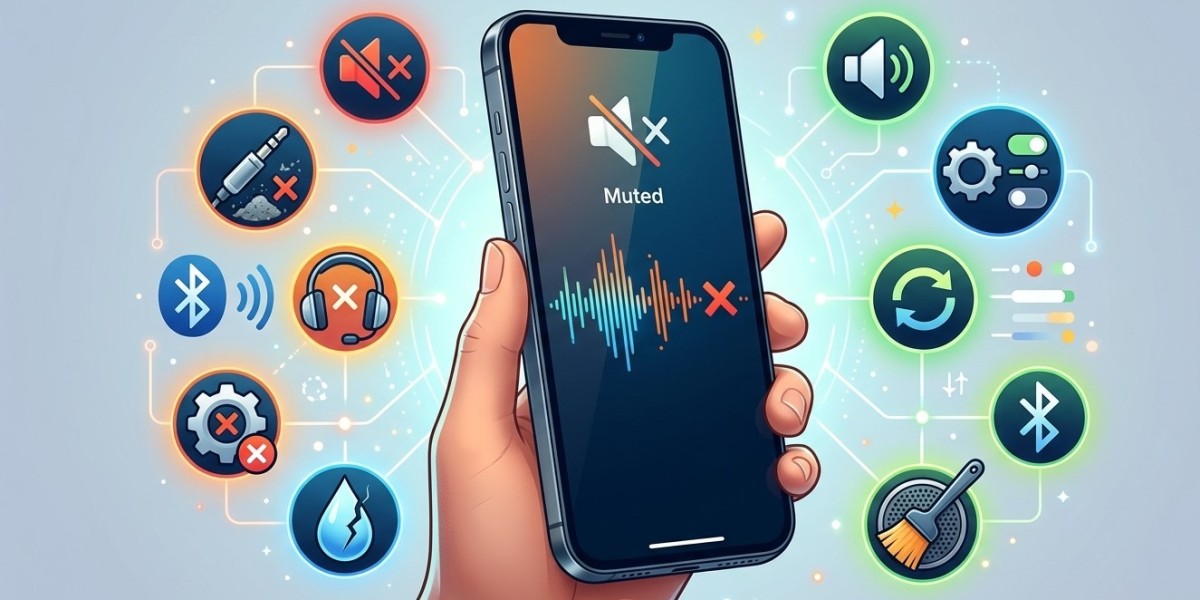

Sound is an important part of the smartphone experience. Whether you are making calls, watching videos, listening to music, receiving notifications, using navigation, or playing games, your phone's speakers and audio system need to work properly. When your smartphone suddenly has no sound, it can be difficult to determine what went wrong. Fortunately, many sound problems can be resolved with a few simple checks.
A phone can lose sound for many different reasons. The volume may be turned down, the device could be connected to Bluetooth headphones, Do Not Disturb may be enabled, or a temporary software glitch may be affecting audio. In other situations, the speaker may be blocked by dust or damaged because of a drop, water exposure, or normal wear and tear.
Before assuming that your smartphone needs professional repair, it is worth checking the basic settings and connections. If the problem continues, Mobile Repair Albany can be considered for professional troubleshooting and diagnosis. For iPhone owners searching for iphone repair near me, understanding the cause of the sound problem can help you determine whether you need technical assistance.
Physical damage can also affect audio performance. A phone that has been dropped may have a damaged speaker, microphone, or internal component. If the same device also has a cracked display, people searching for phone screen repair near me may benefit from having the phone inspected for additional damage rather than addressing only the visible problem.
Check the Volume Level First
The simplest explanation for missing sound is often the volume setting.
Smartphones usually have separate volume controls for media, calls, notifications, and alarms. You may accidentally lower one while another remains unchanged.
Press the volume-up button while playing a video or song and check whether the media volume increases.
Also open your phone's sound settings and review the different volume levels.
If you can hear calls but cannot hear videos, the media volume may be the issue. If notifications are silent but other sounds work, check the notification volume and related settings.
Make Sure Silent Mode Is Turned Off
Many phones have a silent or mute mode that disables incoming notification sounds and alerts.
On some devices, a physical switch controls silent mode. Others use a software control in the quick settings or control center.
Check whether your phone is muted and switch it back to normal sound mode.
Keep in mind that silent mode does not always disable every type of audio. Media, alarms, and other sounds may behave differently depending on your device and settings.
Check Do Not Disturb and Focus Modes
Do Not Disturb and Focus features can silence notifications and calls.
These modes are useful when you want fewer interruptions, but they can sometimes be enabled accidentally or through an automatic schedule.
Open your phone's quick settings or notification controls and check whether Do Not Disturb, Focus, or a similar mode is active.
If it is enabled, turn it off temporarily and test the phone's sound again.
If sound returns, review your schedules and automation settings so the feature does not activate unexpectedly.
Disconnect Bluetooth Devices
Another common reason for missing phone audio is an active Bluetooth connection.
Your smartphone may automatically connect to wireless earbuds, headphones, speakers, a vehicle audio system, or another accessory. When this happens, the sound may be redirected away from the phone's built-in speaker.
Open the Bluetooth settings and check which devices are connected.
Temporarily turn Bluetooth off and play a video or audio file again.
If the sound returns, the problem was likely caused by audio being routed to the connected Bluetooth device.
Restart Your Smartphone
Temporary software glitches can sometimes interfere with audio.
Restarting your smartphone is a simple troubleshooting step that can clear temporary processes and reload system services.
After restarting, test several types of sound, such as:
- Music
- Videos
- Notification sounds
- Speakerphone calls
- Alarm sounds
If everything works normally after restarting, the issue may have been a temporary software problem.
If the sound disappears again repeatedly, additional troubleshooting may be necessary.
Check the Speaker for Dirt and Debris
Smartphone speakers can collect dust, lint, and other debris over time.
A blocked speaker grille can reduce volume and make audio sound muffled or distorted. In severe cases, it may appear as though the speaker is not working at all.
Inspect the speaker openings under good lighting.
Clean the exterior gently using a clean, soft, dry brush or microfiber cloth. Avoid pushing dirt deeper into the speaker grille.
Do not pour liquid onto the speaker or use sharp objects to clean the openings.
If the speaker remains quiet after cleaning, the issue may be internal rather than simply a blockage.
Test With Headphones
Connecting headphones can help determine whether the problem affects the phone's entire audio system or only its built-in speaker.
If wired or wireless headphones produce normal sound while the built-in speaker remains silent, the speaker itself may have a problem.
If headphones also produce no audio, the issue could involve software, audio routing, or another internal component.
This simple test can provide useful information before seeking professional repair.
Check the Audio Output Settings
Some smartphones allow users to choose where audio should be played.
Depending on your device, audio may be routed through:
- Phone speaker
- Bluetooth headphones
- Wireless speakers
- USB accessories
- Car audio systems
- Other connected devices
Check your audio output settings and make sure the correct output is selected.
If you recently connected your phone to another device, this is especially important.
Check Individual App Settings
If your phone has no sound in only one application, the problem may be specific to that app.
For example, you might hear music normally but receive no sound while watching videos in one particular application.
Check the app's own volume controls and audio settings.
You should also update the application if an update is available. If the problem started after an update, restarting the phone or reinstalling the app may help.
Testing another application can quickly tell you whether the problem is system-wide or limited to a single app.
Update Your Smartphone Software
Outdated software can sometimes cause unexpected problems, including audio issues.
Manufacturers regularly release updates that fix bugs, improve compatibility, and enhance system performance.
Check your phone's software update section and install any available official updates.
Also make sure important applications are updated.
Before installing a major system update, it is always a good idea to back up important data.
Check Whether the Phone Has Water Damage
Liquid exposure can cause serious smartphone problems, including speaker failure.
If your phone recently became wet, the speaker may produce muffled, distorted, or completely absent sound.
Do not use excessive heat to dry the phone. Avoid hair dryers, heaters, or placing the device in extremely hot environments.
If the phone has been exposed to significant moisture and audio problems appear afterward, professional inspection is recommended. Liquid can affect components beyond the speaker, and problems may become worse over time.
Consider Recent Physical Damage
Think about whether the phone was recently dropped or struck.
A drop can damage the speaker, loosen internal connections, crack components, or affect the motherboard.
Sometimes a phone continues working after a fall but develops problems later. If sound stopped working shortly after physical damage occurred, hardware failure becomes more likely.
A professional technician can inspect the device to determine whether internal damage is responsible.
What If the Speaker Sounds Distorted?
Not all speaker problems result in complete silence.
You may still hear audio, but it could sound:
- Crackly
- Muffled
- Distorted
- Weak
- Tinny
- Intermittent
These symptoms can indicate a dirty speaker grille, damaged speaker, water exposure, or an internal hardware problem.
Start with basic troubleshooting, including cleaning the speaker area, restarting the device, and checking volume settings.
If distortion continues at different volume levels and with different apps, professional inspection may be appropriate.
What to Do If You Cannot Hear People During Calls
If the problem only occurs during phone calls, the issue may involve the earpiece speaker rather than the main loudspeaker.
Try switching to speakerphone during a call.
If you can hear the other person through speakerphone but not through the regular earpiece, the earpiece may be blocked or damaged.
Also check whether the call volume is turned up.
If the issue affects every call and persists after basic troubleshooting, the earpiece or another component may need professional attention.
What If the Microphone Also Stops Working?
A smartphone's speaker and microphone perform different functions, but both are part of the device's audio system.
If you cannot hear others and they also cannot hear you, there may be more than one problem.
Test the microphone by recording a short voice memo or video.
If the recording has no sound, the microphone may be blocked, damaged, or affected by software or hardware problems.
If both microphone and speaker functions are failing, professional diagnosis becomes particularly useful.
When Should You Get Professional Phone Repair?
Basic troubleshooting can solve many sound problems, but some situations require technical assistance.
Consider professional repair if:
- The speaker produces no sound after troubleshooting
- The phone was recently dropped
- The device was exposed to water
- Audio is consistently distorted
- The speaker works intermittently
- Headphones work but the speaker does not
- The microphone and speaker both malfunction
- The phone has other hardware problems
- Sound problems continue after software updates
A technician can inspect the speaker, microphone, charging port, internal connections, and other relevant components.
For customers in Albany, Mobile Repair Albany can be considered when a persistent audio problem requires professional diagnosis. If you are looking for iphone repair near me, choose a repair service that can troubleshoot both software and hardware-related audio problems.
If your device has also suffered screen damage, searching for phone screen repair near me can help you find repair assistance while having the phone checked for other potential issues.
How to Prevent Smartphone Sound Problems
Taking care of your smartphone can reduce the risk of speaker and audio problems.
Keep the device away from excessive moisture and avoid using it in situations where it could easily be dropped.
Clean the speaker area carefully and regularly. Avoid placing your phone on dusty or dirty surfaces with the speaker openings exposed.
Keep the operating system and applications updated, and avoid installing unreliable software that could interfere with system functions.
Using a protective case can also reduce the risk of damage from accidental drops.
Final Thoughts
A smartphone with no sound can be caused by something simple, such as low volume, silent mode, Do Not Disturb, Bluetooth connections, or a temporary software problem. Before seeking repair, check these settings, restart the phone, test different applications, inspect the speaker, and make sure audio is being sent to the correct output.
If the problem continues, particularly after a drop or water exposure, the speaker or another internal component may be damaged. Professional diagnosis can help identify the real cause and prevent unnecessary repairs.
For local assistance, Mobile Repair Albany can be considered when your smartphone has a persistent audio problem. iPhone users searching for iphone repair near me can seek professional help when basic troubleshooting does not restore sound. If the phone has suffered a cracked display or other physical damage, people searching for phone screen repair near me may also benefit from having the entire device inspected.
Addressing sound problems early can help protect your smartphone's other components and keep your device working reliably for calls, entertainment, communication, and everyday use.