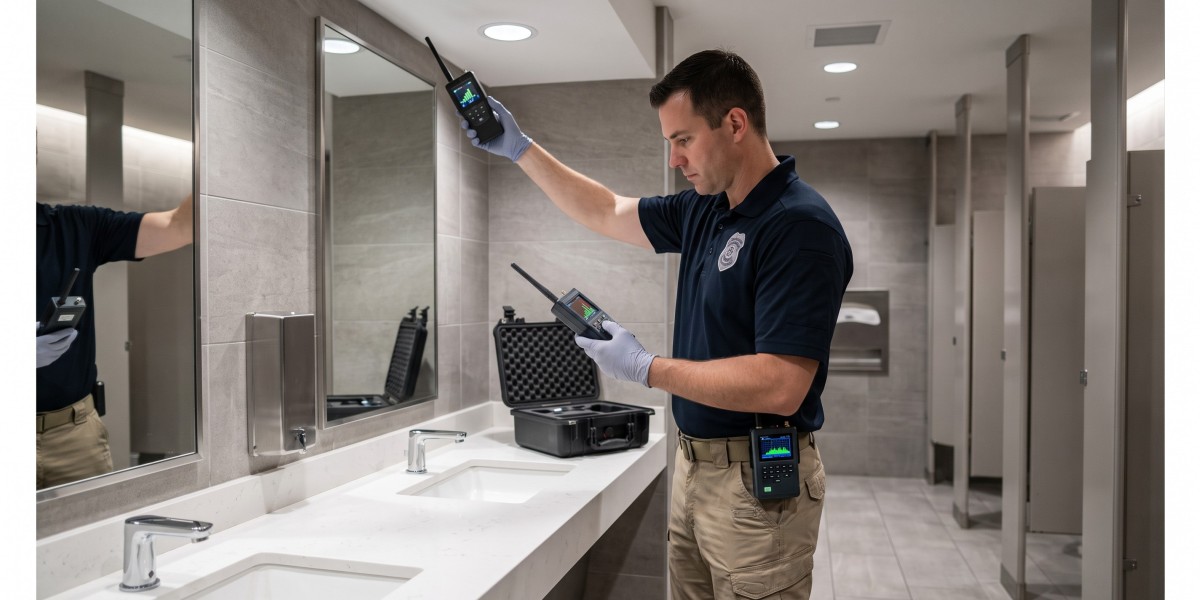

Privacy can be difficult to maintain in places where people naturally expect to be alone. Restrooms, changing areas, hotel bathrooms, workplace facilities, and other private spaces can potentially be targeted by unauthorized surveillance devices. This is where restroom bug sweeps can provide an important layer of protection. A professional sweep is designed to identify potential hidden cameras, microphones, wireless transmitters, and other surveillance equipment that may have been deliberately concealed.
Unauthorized surveillance is a serious privacy concern because modern surveillance equipment can be extremely small and can be hidden inside ordinary-looking objects. Devices may be placed behind fixtures, inside electrical components, or within decorative items. Because many of these devices are difficult to identify through a basic visual inspection, a professional approach can be valuable when privacy is a major concern.
Why Are Restrooms Vulnerable to Hidden Surveillance?
Restrooms are considered private spaces, which makes them particularly sensitive locations for security inspections. Individuals generally expect that conversations, personal activities, and movements inside these areas will not be recorded.
Unfortunately, surveillance devices can sometimes be disguised so that they blend into their surroundings.
Common objects that could potentially conceal unauthorized equipment include:
- Ceiling fixtures
- Air vents
- Smoke detectors
- Electrical outlets
- Light fixtures
- Wall decorations
- Hooks and shelves
- Mirrors and surrounding fixtures
- Electronic dispensers
- Unusual or recently installed objects
Not every unusual object is a surveillance device. However, unexplained modifications, unfamiliar electronics, or objects positioned toward areas where privacy is expected should be treated carefully.
What Are Restroom Bug Sweeps?
A restroom bug sweep is a professional inspection intended to identify potential surveillance or listening equipment within a restroom or another privacy-sensitive environment.
Depending on the inspection, different detection techniques may be used to locate suspicious equipment. A professional technician may examine the physical environment while also checking for electronic signals or other indicators associated with surveillance devices.
The objective is not simply to look around a room. Instead, the environment is assessed systematically so that potential security weaknesses are less likely to be overlooked.
A professional inspection may involve:
- Physical examination of fixtures and furnishings
- Electronic signal detection
- Radio-frequency analysis
- Inspection for suspicious wireless transmitters
- Detection of certain hidden cameras
- Examination of unusual wiring
- Assessment of recently modified areas
- Documentation of suspicious findings
The exact methods used will depend on the environment, equipment, and suspected threat.
How Can Hidden Cameras Be Detected?
Hidden cameras can be particularly difficult to identify because modern devices may be extremely compact. Some cameras can be concealed inside objects that appear completely ordinary.
During a professional inspection, potential camera locations may be examined carefully. Certain detection technologies can also be used to identify optical characteristics associated with camera lenses.
A visual inspection should still be performed because technology does not replace human judgment.
Particular attention may be given to objects that:
- Have an unexplained opening or lens-like surface
- Are positioned toward sensitive areas
- Were recently installed
- Contain unexplained wiring
- Appear inconsistent with surrounding fixtures
- Have no obvious functional purpose
If a suspicious object is found, it should not automatically be assumed to be a surveillance device. Proper identification and documentation should be performed before conclusions are reached.
Can Listening Devices Be Found During a Bug Sweep?
Yes, depending on the type of device and the detection equipment being used.
Some listening devices transmit information wirelessly, while others may rely on wired connections or local storage. This means a single detection technique may not identify every possible threat.
Electronic inspections can therefore be useful when there is a reasonable concern that audio surveillance equipment has been installed.
A comprehensive inspection may consider:
- Wireless transmitters
- Radio-frequency signals
- Suspicious electronic components
- Unusual wiring
- Modified electrical fixtures
- Devices connected to nearby infrastructure
The effectiveness of detection depends on the technology involved, the condition of the device, environmental interference, and the expertise of the person conducting the inspection.
Why Professional Restroom Bug Sweeps Matter
A basic visual search can provide peace of mind, but it has limitations. Many surveillance devices are designed specifically to remain inconspicuous.
Professional restroom bug sweeps are valuable because inspections can be conducted using a structured methodology rather than relying entirely on casual observation.
An experienced specialist can understand how surveillance equipment may be concealed and where suspicious installations are more likely to occur.
Professional inspections may also provide:
- A systematic security assessment
- Specialized detection equipment
- Experienced interpretation of electronic signals
- Physical inspection of potential hiding locations
- Documentation of suspicious findings
- Recommendations for improving privacy
This is particularly important for businesses, hotels, offices, healthcare facilities, educational institutions, and other organizations responsible for maintaining privacy-sensitive environments.
When Should a Restroom Be Inspected?
There is no single situation in which an inspection is appropriate. The decision generally depends on the level of privacy risk and the circumstances surrounding the location.
An inspection may be considered when:
- A suspicious object has been discovered
- Unauthorized access to a private area is suspected
- A restroom has recently been renovated
- New electronic equipment has appeared unexpectedly
- There are concerns about privacy violations
- An organization has experienced a security incident
- A sensitive facility requires periodic security assessments
Routine inspections may also be considered for organizations that have a higher-than-normal privacy requirement.
For businesses, preventative security checks can sometimes identify potential issues before they become serious incidents.
What Should You Do If You Discover a Suspicious Device?
Finding a suspicious device can be alarming. However, the situation should be handled carefully.
If something appears to be a hidden camera or listening device, avoid unnecessarily touching, dismantling, or destroying it. Preserving the condition of the object may be important for documentation or investigation.
Consider taking the following steps:
- Move away from the suspicious object if doing so is practical.
- Document what was observed without disturbing the device.
- Notify the appropriate property owner, security department, or responsible authority.
- Consider contacting a qualified security professional.
- Report suspected unlawful surveillance to the appropriate authorities when necessary.
The correct response can vary depending on the location and circumstances. Professional advice should be sought when there is a serious concern.
Restroom Privacy Requires More Than Technology
Technology is an important component of a privacy inspection, but it should not be considered the only solution.
Physical security practices also matter. Access to sensitive areas should be controlled, maintenance activity should be documented, and unexplained changes should be investigated.
Organizations can strengthen restroom privacy by:
- Restricting unauthorized access
- Monitoring maintenance procedures
- Keeping records of renovations
- Inspecting newly installed fixtures
- Establishing security reporting procedures
- Training staff to recognize unusual equipment
- Conducting periodic security assessments
A layered security approach is generally more effective than relying on a single detection method.
The Importance of Choosing an Experienced Security Professional
Not all inspections are performed to the same standard. The experience of the person conducting the assessment can influence how potential findings are interpreted.
A qualified professional should understand both the capabilities and limitations of surveillance detection technology.
Before arranging an inspection, organizations may want to consider:
- The provider's relevant experience
- The inspection methodology used
- The types of detection equipment available
- Whether findings are documented
- Whether a written report is provided
- How potential discoveries are handled
- Whether the provider understands privacy-sensitive environments
Professional credibility and transparent methodology are particularly important when an inspection may result in significant security or legal decisions.
Why Businesses Should Take Restroom Privacy Seriously
Privacy concerns can affect more than individual visitors. Businesses have a responsibility to create environments where customers, employees, and visitors can reasonably expect privacy.
A suspected surveillance incident can damage trust and reputation. It may also create legal and operational complications depending on the circumstances and applicable laws.
For this reason, privacy should be incorporated into a broader security strategy rather than treated as an afterthought.
Regular security assessments can help organizations identify vulnerabilities and establish stronger internal procedures.
Restroom Bug Sweeps as Part of a Broader Privacy Strategy
A restroom bug sweep should not necessarily be viewed as a one-time solution. When there is a genuine security concern, it can form part of a broader privacy protection program.
The most effective approach combines professional inspections with responsible facility management and employee awareness.
For high-risk environments, inspections may be scheduled after renovations, changes in occupancy, security incidents, or other circumstances that could increase the possibility of unauthorized surveillance.
It should also be remembered that detection technology has limitations. No inspection can guarantee that every possible surveillance device will be discovered. Device design, environmental conditions, power status, transmission methods, and other factors can affect detection.
That is why professional expertise and a methodical inspection process remain important.
Final Thought
Privacy-sensitive spaces deserve serious protection, and restroom bug sweeps can provide an important layer of security when unauthorized surveillance is suspected. Hidden cameras, microphones, and wireless transmitters can be difficult to identify because modern devices may be designed to blend into ordinary surroundings. A professional inspection combines physical assessment, electronic detection, and experienced analysis to identify potential security concerns more systematically. Whether an inspection is being considered after discovering something suspicious or as part of a preventative security program, a structured approach can help organizations and individuals make more informed decisions about protecting privacy.